Journocoders

Brown Institute at Columbia 2950 Broadway, New York, NY, United States

For the second Journocoders NYC, we’ll be exploring the web-based coding notebook service Observable. This is a fairly new online platform, but Observable notebooks are already being used to produce lightweight interactive explainers and live code samples. If you’ve ever used Jupyter Notebooks, Observable may feel familiar – except that it’s for JavaScript code instead

Journocoders NYC

Brown Institute at Columbia 2950 Broadway, New York, NY, United States

Journocoders NYC is a monthly meetup for journalists and others working in the media to learn and share technical skills for use in their reporting. That might be data analysis as part of an investigation, scraping data from government websites, building data visualisations to better tell a story, or something else entirely. RSVP HERE For

Journocoders NYC

Brown Institute at Columbia 2950 Broadway, New York, NY, United States

Journocoders NYC is a monthly meetup for journalists and others working in the media to learn and share technical skills for use in their reporting. That might be data analysis as part of an investigation, scraping data from government websites, building data visualisations to better tell a story, or something else entirely. This month Journocoders

Photography in Collaboration: Migration and Religion

Brown Institute at Columbia 2950 Broadway, New York, NY, United States

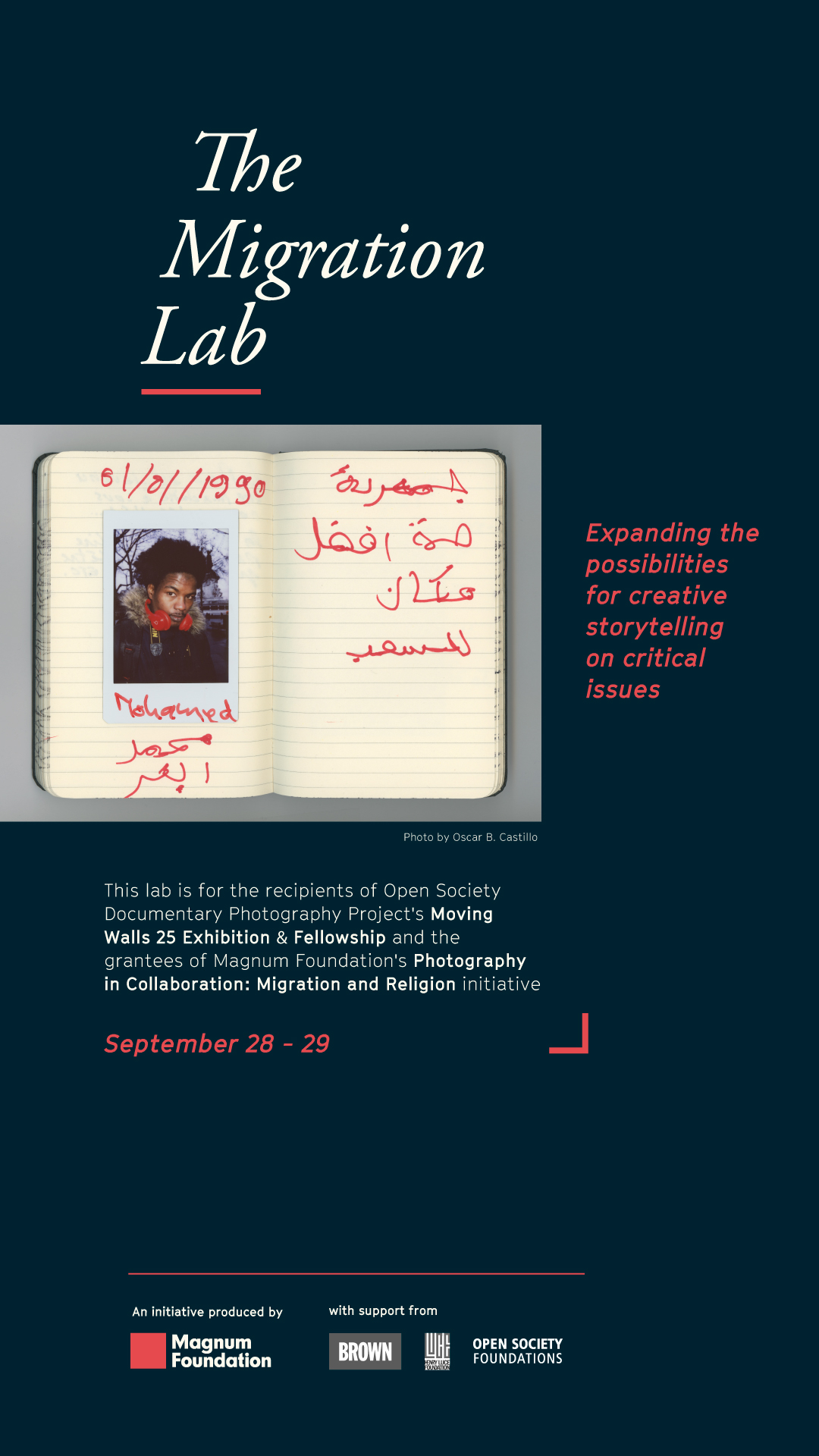
Magnum Foundation is producing a project development laboratory with the Brown Institute for Media Innovation on September 28 and 29, 2018 that will bring together twelve photographers and their collaborators who are all working on projects related to migration. By gathering a diverse group of practitioners and experts, the lab will create a space for

Reproducible Data Journalism without Code

Brown Institute at Columbia 2950 Broadway, New York, NY, United States

Join Krishna Bharat, creator of Google News and Jonathan Stray, designer of Workbench to discuss reproducible data journalism without code. Reproducibility allows readers and journalists to see how you produced

2018-2019 SPEAKER SERIES: FELICE FRANKEL

Cypress Auditorium, Allen Extension 420 Via Palou Mall, Stanford, CA, United States

SCIENCE PHOTOGRAPHER & MIT RESEARCH SCIENTIST On January 30, the Brown Institute welcomes celebrated science photographer and MIT Research Scientist Felice Frankel. She will offer a masterclass on "Image and Meaning" and discuss her new book "Picturing Science and Engineering" (MIT Press) in which she offers a guide for creating science images that are both

Points Unknown Mapping Module I: Intro to Mapping / QGIS

Brown Institute at Columbia 2950 Broadway, New York, NY, United States

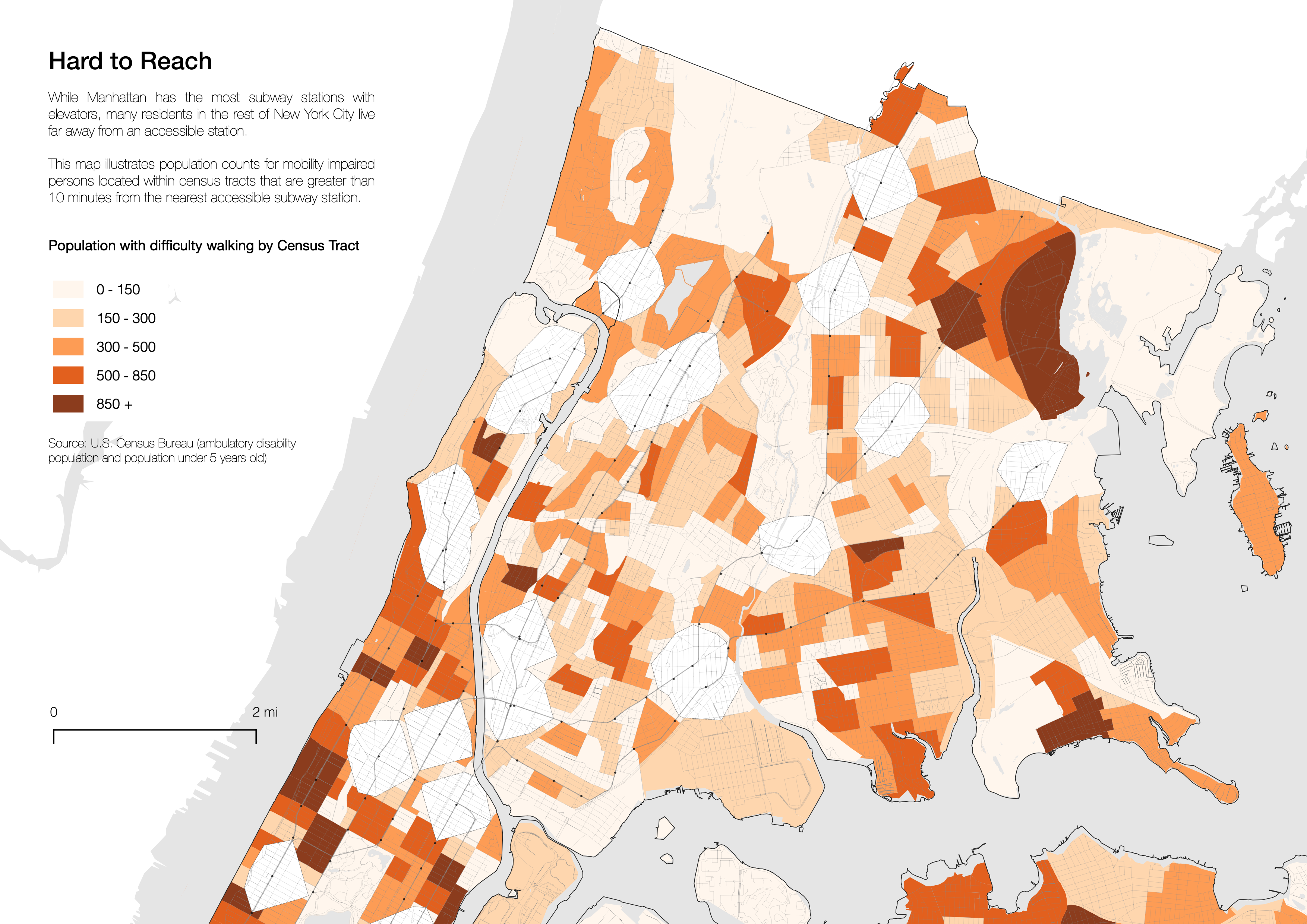
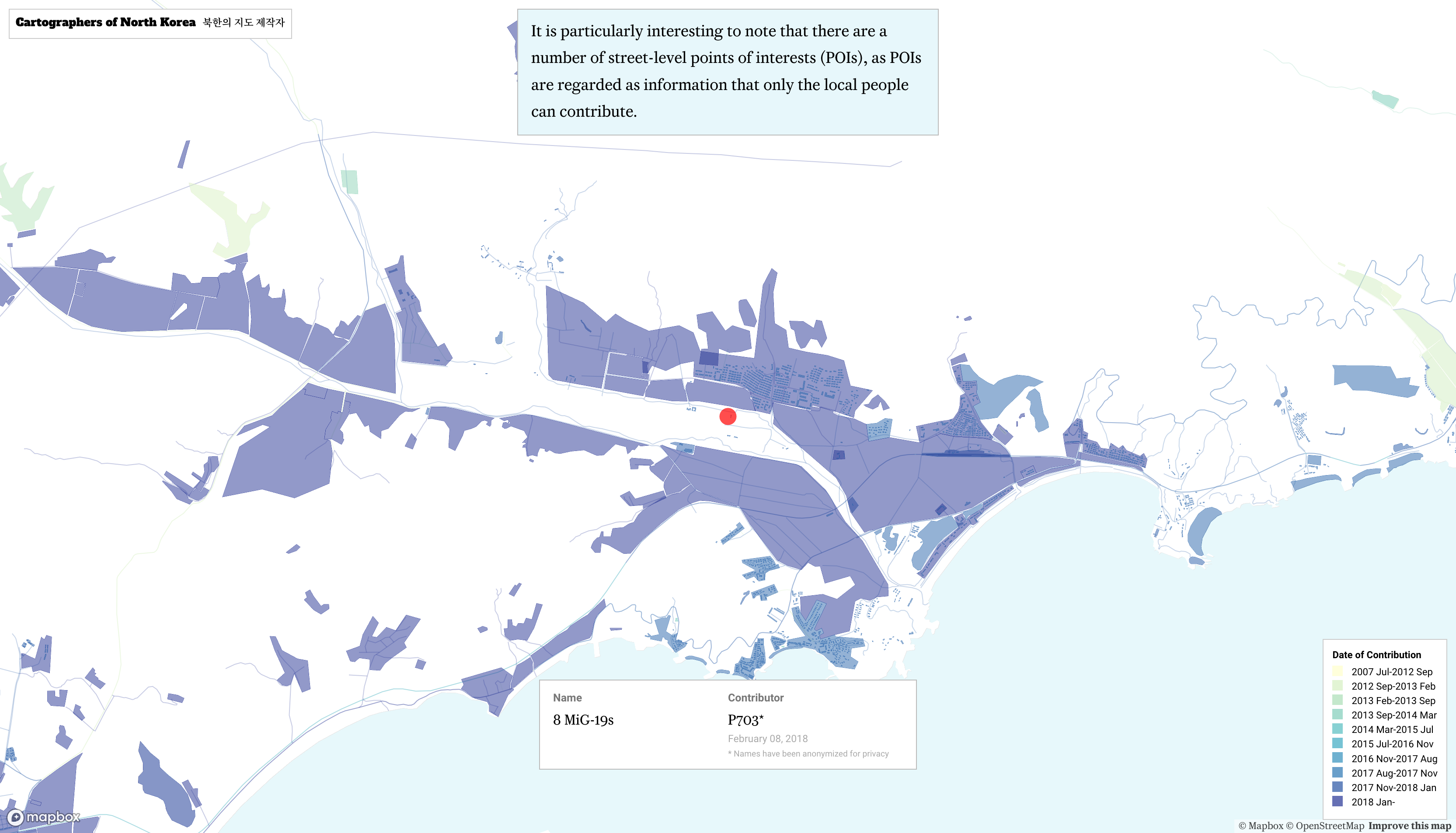
News unfolds in places and every newsworthy event is shaped by the details of location. Those details might include the specifics of a neighborhood as it is today or of the history leading to its current configurations. Alongside the development of web technologies, journalistic organizations have incorporated web-based maps to enhance reader engagement with stories.

Points Unknown Mapping Module II: Annotated Maps / Illustrator

Brown Institute at Columbia 2950 Broadway, New York, NY, United States

News unfolds in places and every newsworthy event is shaped by the details of location. Those details might include the specifics of a neighborhood as it is today or of the history leading to its current configurations. Alongside the development of web technologies, journalistic organizations have incorporated web-based maps to enhance reader engagement with stories.

Points Unknown Mapping Module III: Web Maps / Mapbox.js

Brown Institute at Columbia 2950 Broadway, New York, NY, United States

News unfolds in places and every newsworthy event is shaped by the details of location. Those details might include the specifics of a neighborhood as it is today or of the history leading to its current configurations. Alongside the development of web technologies, journalistic organizations have incorporated web-based maps to enhance reader engagement with stories.

Immersive Storytelling – Photogrammetry & Augmented Reality

Brown Institute at Columbia 2950 Broadway, New York, NY, United States

From augmented, mixed and virtual reality, to 3D storytelling, immersive technologies provide new opportunities for journalists to broaden their stories and engage readers. While these technologies have been deployed in museum spaces, game design, and architecture/planning, journalism has been slow to move beyond 360-degree video and basic implementations of augmented reality. When outlets such as

Statistics Breakfast with Mark Hansen (Thursdays in February and March 2021)

Virtual

Some of the biggest stories of 2020 were statistical. We tracked exponential curves as COVID-19 spread across the country. On the 50th anniversary of Earth Day, we reassessed the pace of climate change. And after the 2020 Election, the country debated whether any of the then-President’s claims about voter fraud could be true, attempting to

Statistics Breakfast with Mark Hansen (Thursdays in February and March 2021)

Virtual

Some of the biggest stories of 2020 were statistical. We tracked exponential curves as COVID-19 spread across the country. On the 50th anniversary of Earth Day, we reassessed the pace of climate change. And after the 2020 Election, the country debated whether any of the then-President’s claims about voter fraud could be true, attempting to

Statistics Breakfast with Mark Hansen (Thursdays in February and March 2021)

Virtual

Some of the biggest stories of 2020 were statistical. We tracked exponential curves as COVID-19 spread across the country. On the 50th anniversary of Earth Day, we reassessed the pace of climate change. And after the 2020 Election, the country debated whether any of the then-President’s claims about voter fraud could be true, attempting to

Statistics Breakfast with Mark Hansen (Thursdays in February and March 2021)

Virtual

Some of the biggest stories of 2020 were statistical. We tracked exponential curves as COVID-19 spread across the country. On the 50th anniversary of Earth Day, we reassessed the pace of climate change. And after the 2020 Election, the country debated whether any of the then-President’s claims about voter fraud could be true, attempting to

Volumetric capture and immersive technologies – primer

Virtual

What are the differences between AR, VR, and MR? What are some options out there for creating and publishing immersive content? In this session, we'll map the current landscape of immersive and volumetric technologies and clarify essential terminology. About the series The Brown Institute is pleased to announce the launch of Volumetric Reporting, supported by

Columbia Hacking for Humanity

Columbia University

Hacking for Humanity is an opportunity to initiate and get traction for startup ideas that are focused on solving a problem for people and/or the planet. There are many terms used to describe such ventures including: “impact ventures”, “double bottom line”, “double impact”, “triple bottom line”, “sustainable”, “ESG”, and others. We use the term social

Pitch Practice Workshop for the Innovation Challenge in Journalism, Media, and Technology

Zoom Meeting

Register Here The application deadline for this Challenge is coming up. This pitch practice workshop, tailored for first-time founders, will also help you draft your best application. Join us for this informal and interactive workshop designed to help you present with confidence and credibility. This workshop is specifically designed for folks who may not be

Exploring and Mapping NYC’s Building Energy Data Through Programming

Virtual

This event is part of NYC Open Data Week 2022. We've all seen the energy grades posted at the entrances of large buildings in New York City. But how does one building compare to its neighbor, or to buildings in other parts of the city? And how is the city doing overall? Are grades improving

Generative AI Dine + Design

Brown Institute at Columbia 2950 Broadway, New York, NY, United States

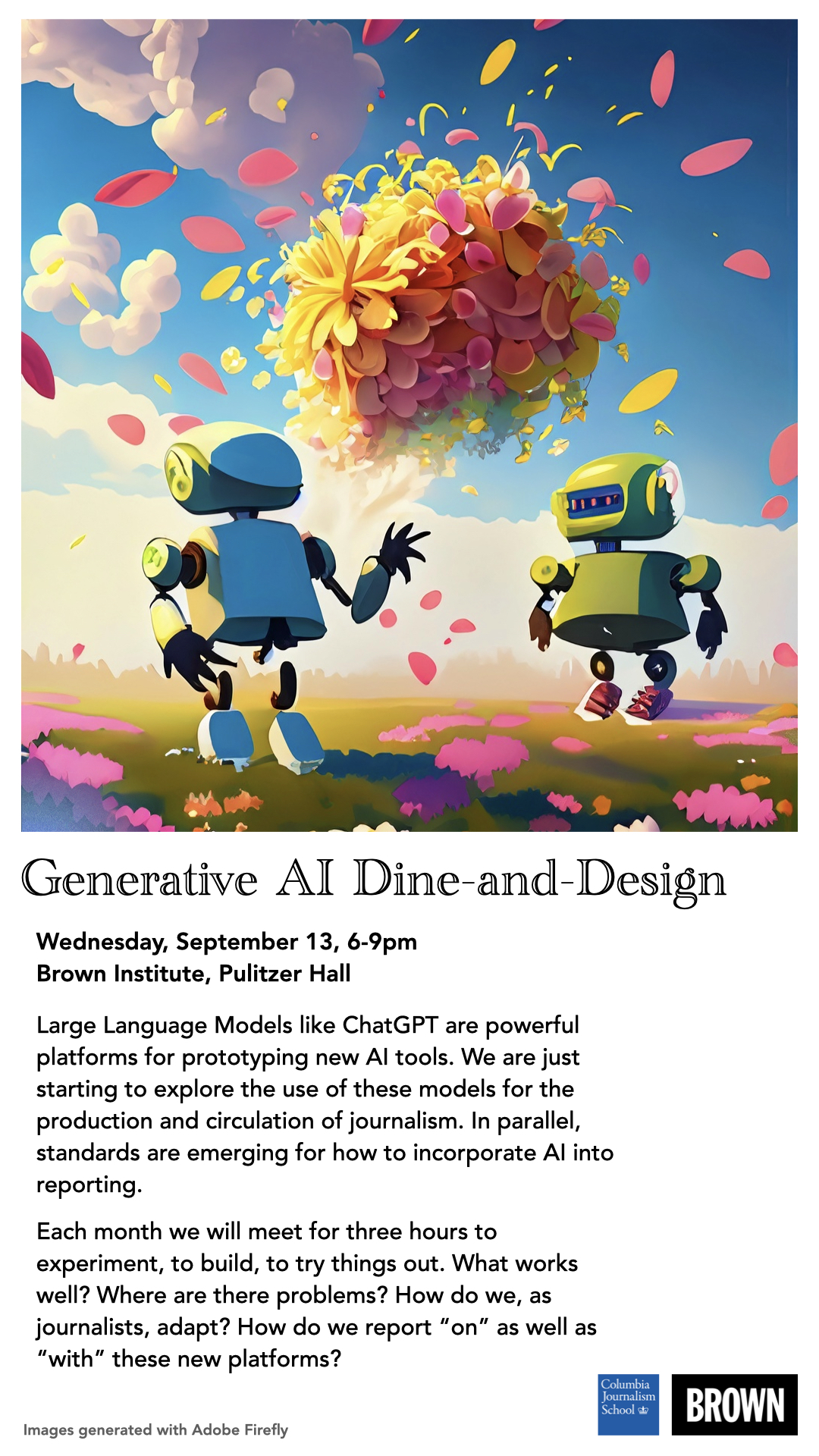
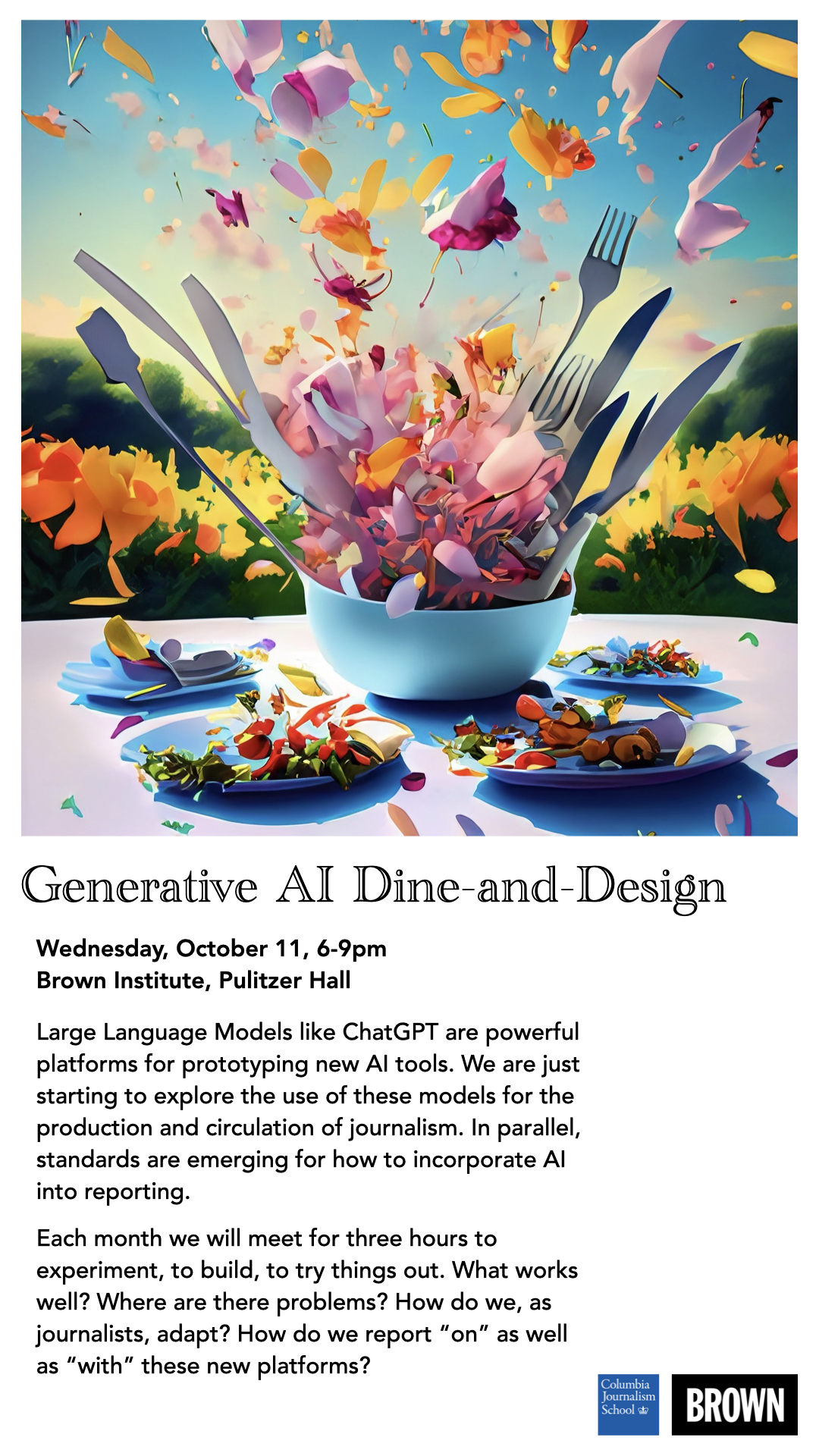
In the last year, new generative AI platforms have made headlines. Large Language Models (LLMs) like ChatGPT, Bard, LLaMA and claude have been compared on their abilities to perform knowledge and reasoning tasks (answering questions, solving problems with external tools), language manipulation (generating summaries, translating text, “reversioning” stories), and common data analyses (structuring data, tagging