
Magic Grant Information Session (Stanford)
Want to learn more about our Magic Grants? Come to one of our upcoming information session where you can find out: What kind of projects we funded in the past.
Want to learn more about our Magic Grants? Come to one of our upcoming information session where you can find out: What kind of projects we funded in the past.
Are you passionate about the role that emerging technologies can play in the future of media? Do you have a story that can only be told using technology outside the scope of traditional media? A Brown Institute Magic Grant might be for you. Established in 2012 as a collaboration between Columbia University’s Journalism School and
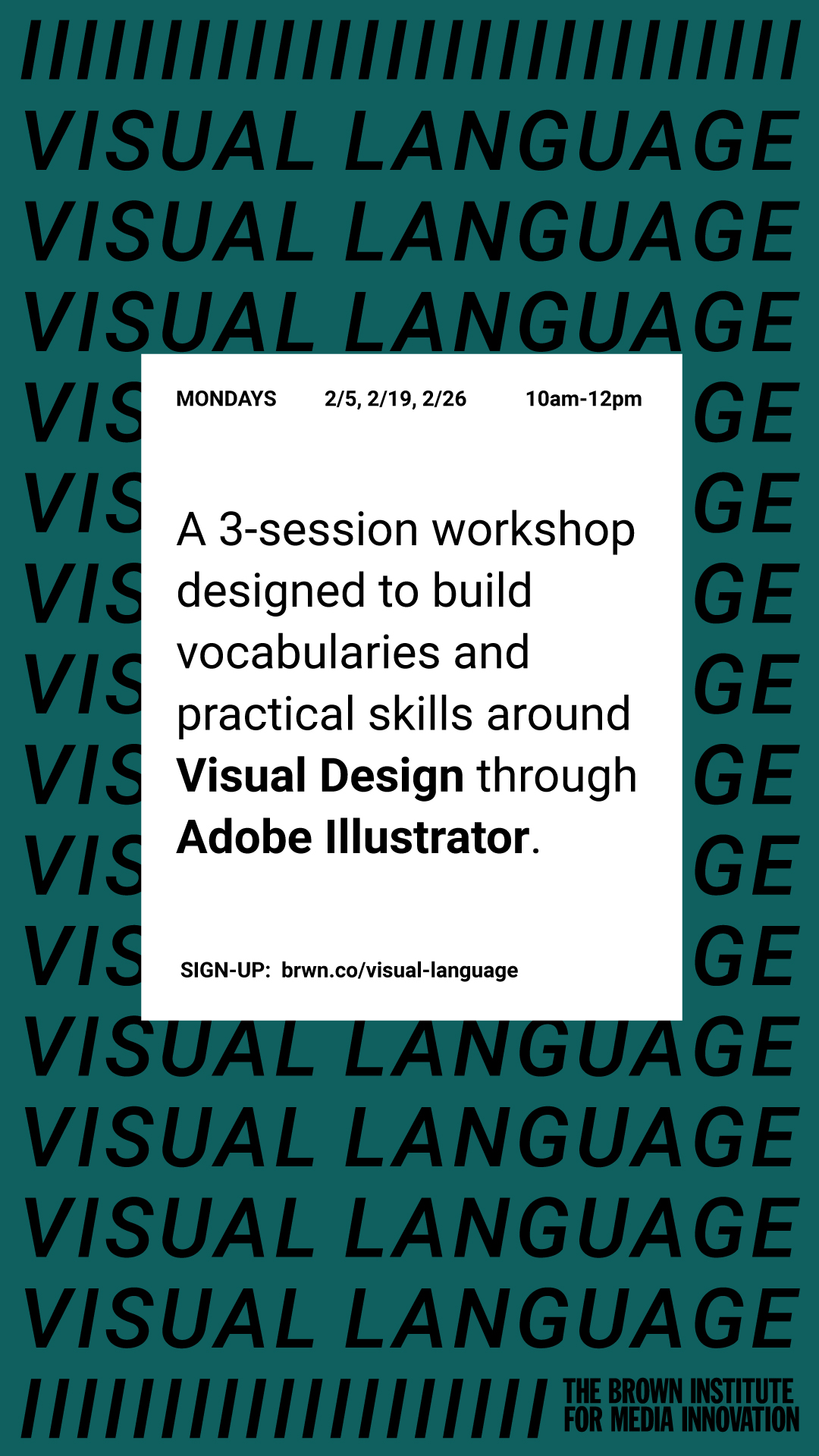
The Brown institute at Columbia will be offering a three-session workshop on Visual Language, designed for journalism students to build vocabularies and practical skills around visual design through lectures, discussions, and hands-on sessions. You will walk away with a basic understanding of design principles and an overview of the graphics editor Adobe Illustrator. In the
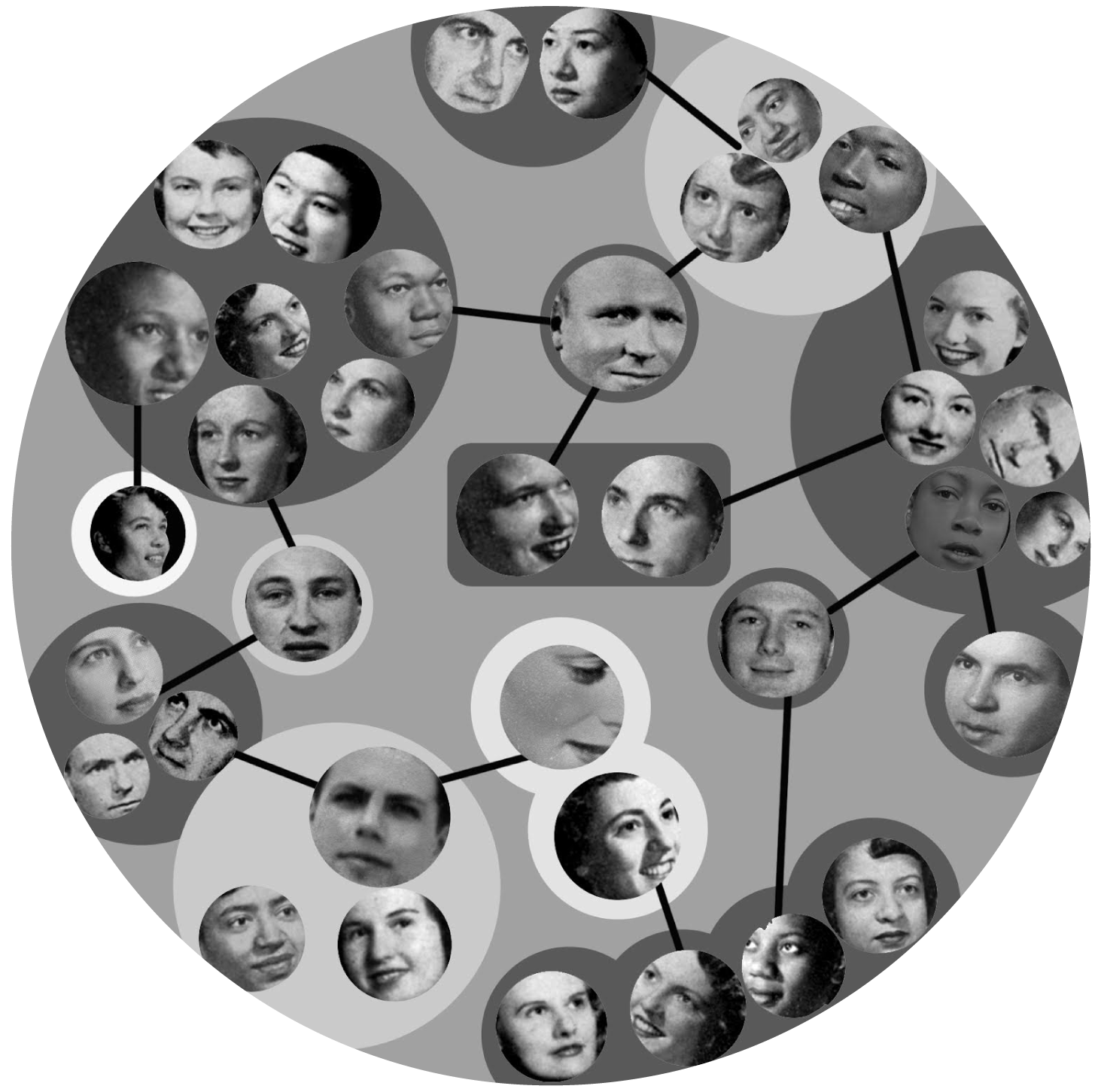
Join us for an evening discussion between Kevin Connor, LittleSis and Frederik Obermaier, Pulitzer Prize winning journalist from Suddeutsche Zeitung. They will discuss networks and the role they can play in journalistic
Graph databases are optimized for working with complex and connected data. Social media data is a great example of a complex dataset where the connections in the data are often as important as the discrete data points, making it a great use case for applying network analysis using a graph database. In this hands-on workshop
The Brown institute at Columbia will be offering a three-session workshop on Visual Language, designed for journalism students to build vocabularies and practical skills around visual design through lectures, discussions, and hands-on sessions. You will walk away with a basic understanding of design principles and an overview of the graphics editor Adobe Illustrator. In the
Want to learn more about our Magic Grants? Come to one of our upcoming information sessions where you can find out: What kind of projects we funded in the past.
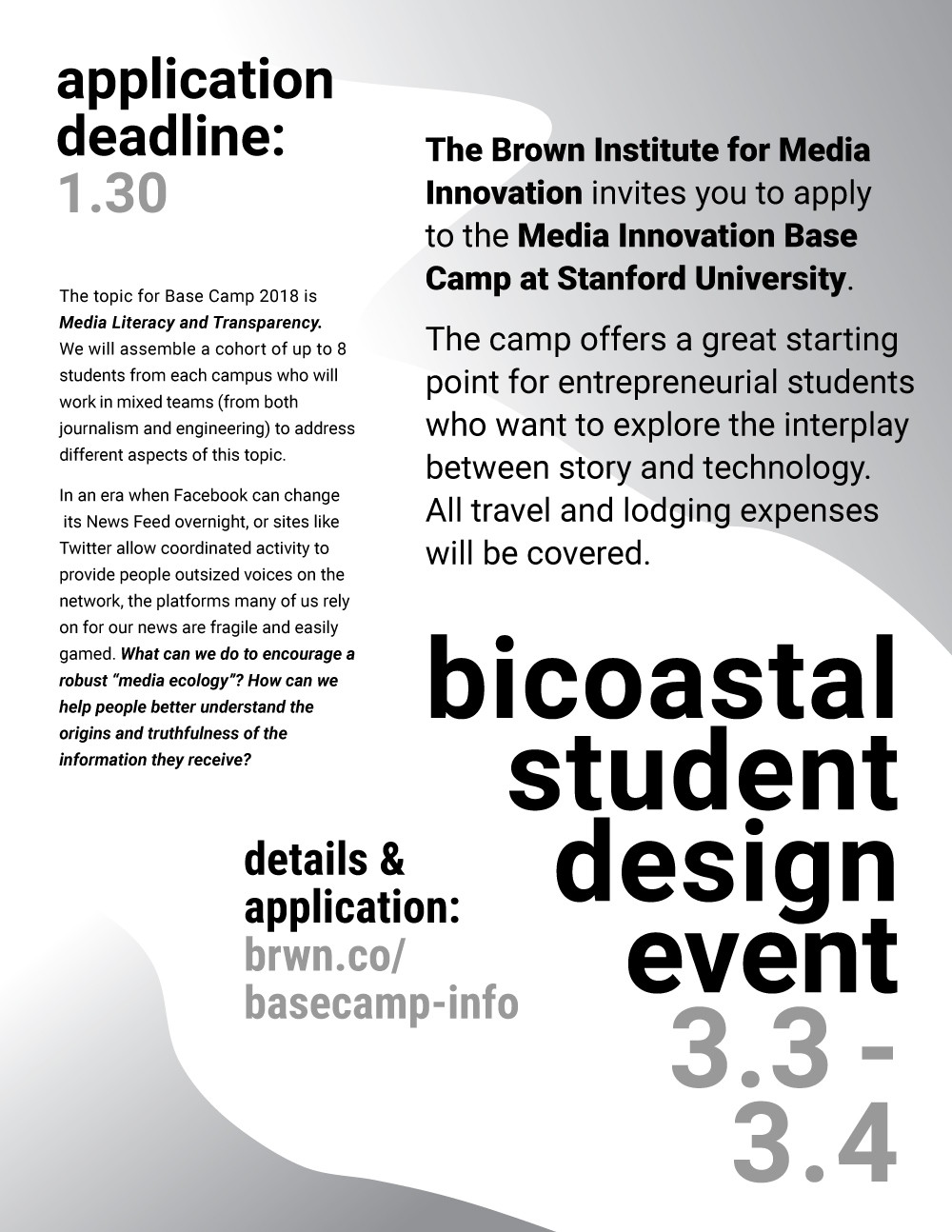
The Brown Institute for Media Innovation invites you to apply to the Media Innovation Base Camp taking place on March 3-4, 2018 at Stanford University. The Media Innovation Base Camp offers a great starting point for entrepreneurial students who want to explore the interplay between story and technology. All travel and lodging expenses will be covered
Are you passionate about the role that emerging technologies can play in the future of media? Do you have a story that can only be told using technology outside the scope of traditional media? A Brown Institute Magic Grant might be for you. Established in 2012 as a collaboration between Columbia University’s Journalism School and Stanford’s School of
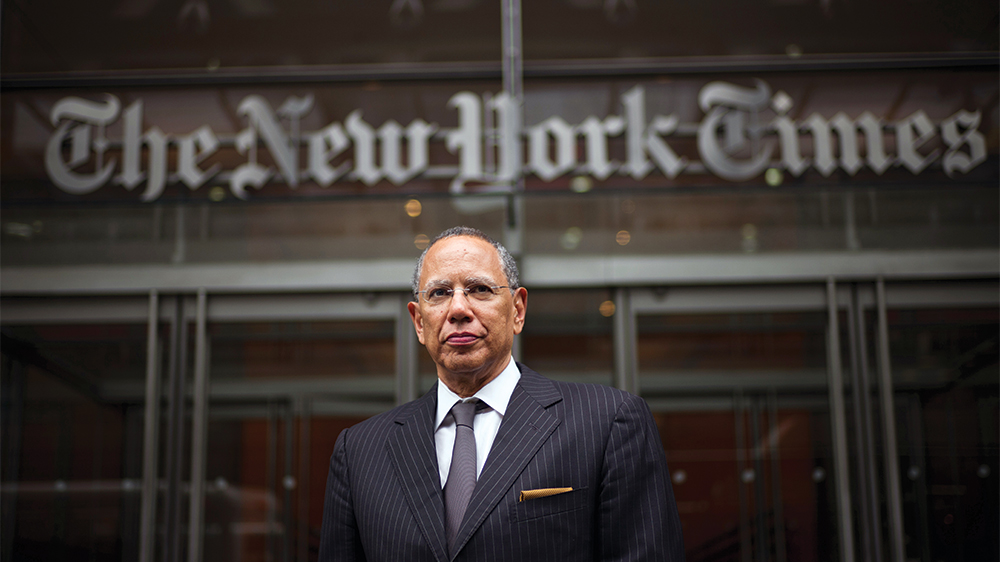
Join the Brown Institute for Media Innovation at Stanford University as we welcome New York Times Executive Editor Dean Baquet in a conversation on media, the news, and the state of journalism. Tickets available via Eventbrite.
Please RSVP if planning to attend.
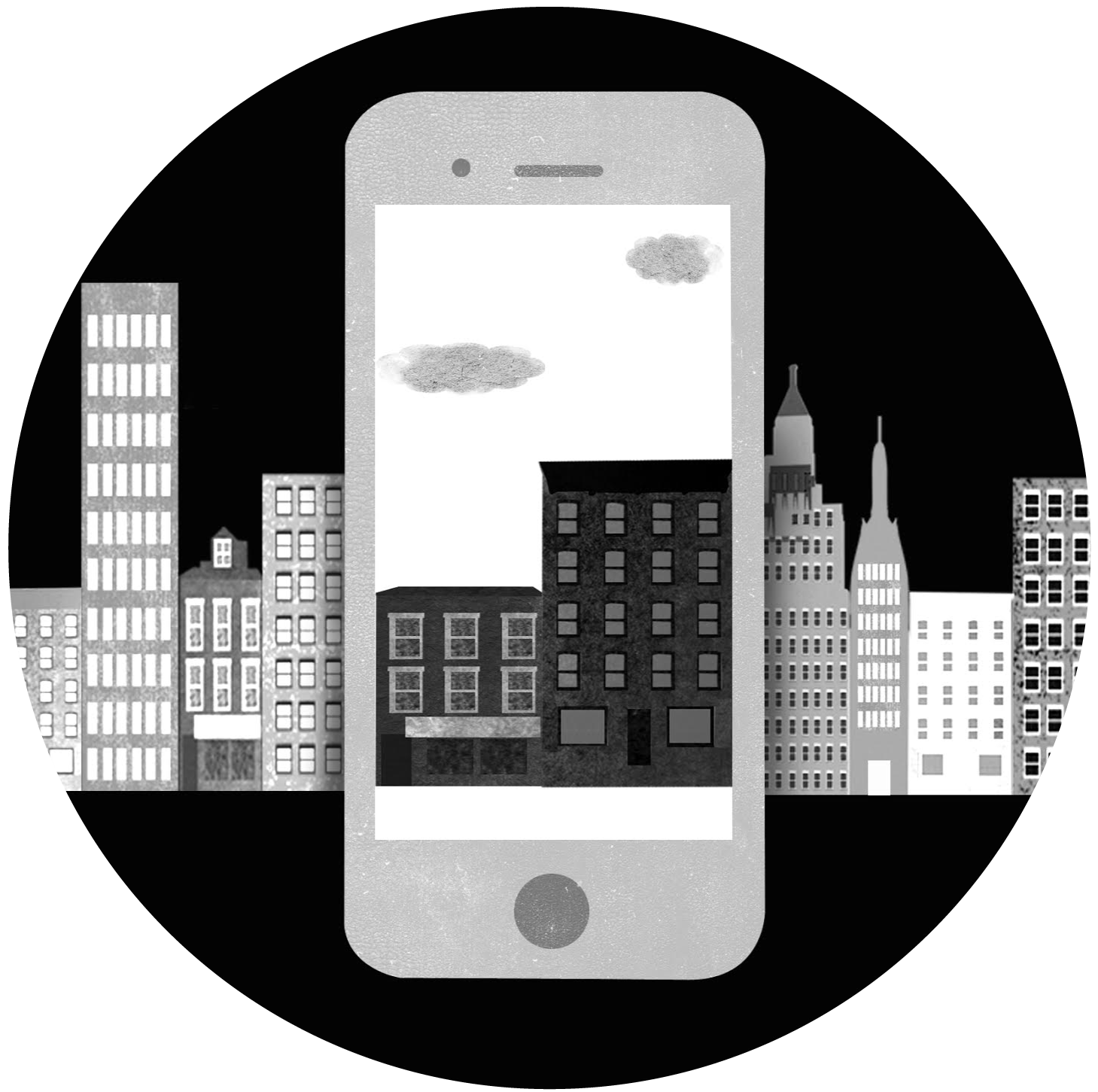
This is perhaps our most experimental event in terms of “distance” from journalistic practice. Augmented reality (AR) provides a view of an event or phenomenon that is enhanced, “augmented,” with computer-generated elements, perhaps responding to sensor input (sound, video of the event, GPS coordinates) or triggers computed through computer vision tools operating on the scene.
The storytelling capacity with AR is enormous, although the toolsets are still a bit hard to use. Join members from Etsy and the New York Times to get up-and-running with augmented reality, and spend the day building a story prototype utilizing the technology. Apply for the workshop
Join Columbia University's Tow Center for Digital Journalismand the Brown Institute for Media Innovation at Stanford University on April 13 for an afternoon conference on: Public Record Under Threat: News and the Archive in the Age of Digital Distribution. Panels will feature journalists, technologists, librarians, and engineers who will discuss how they are preserving the
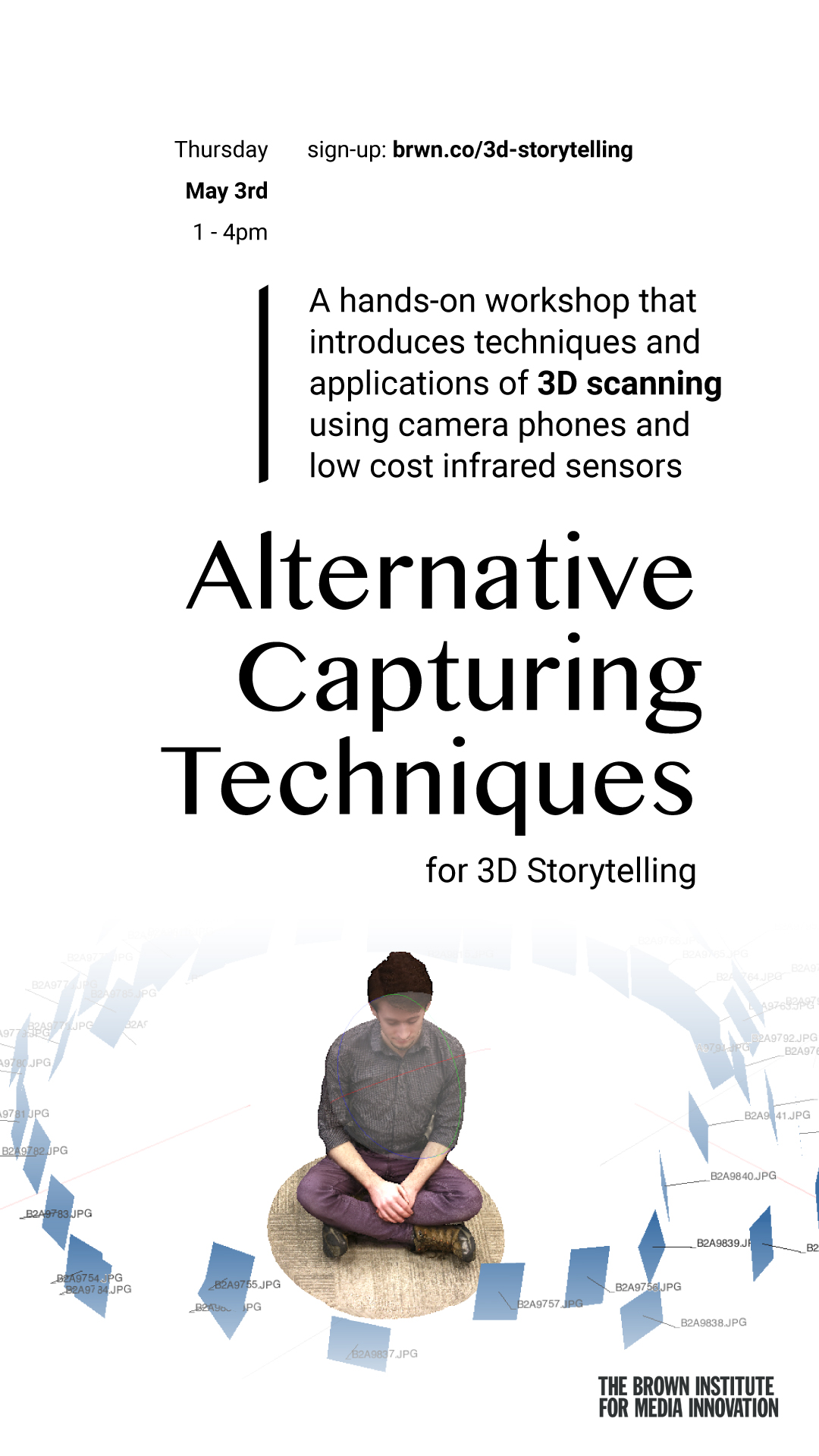
The Brown Institute is pleased to announce another training session related to Augmented Reality (AR) and Virtual Reality (VR) -- this one is brought to you by our own Rosalie Yu. Alternative Capturing Techniques for 3D Storytelling What can our phone cameras capture besides 2D images? How can you reconstruct a world in 3D using these
RSVP HERE What would a news organization look like if it was optimized for user trust? Getting there will take innovation, but not primarily the kind that involves new tech. Jay Rosen will spell out what he means by "optimizing for trust," and suggest the kind of innovation required, much of which involves new forms
For the second Journocoders NYC, we’ll be exploring the web-based coding notebook service Observable. This is a fairly new online platform, but Observable notebooks are already being used to produce lightweight interactive explainers and live code samples. If you’ve ever used Jupyter Notebooks, Observable may feel familiar – except that it’s for JavaScript code instead
The Sanford C. Bernstein & Co. Center for Leadership and Ethics at Columbia Business School; Brown Institute for Media Innovation at Columbia Journalism School; Technology, Media, and Communications specialization at the School of International and Public Affairs; and Institute for Social and Economic Research and Policy at Columbia University are hosting a conference to exchange
Journocoders NYC is a monthly meetup for journalists and others working in the media to learn and share technical skills for use in their reporting. That might be data analysis as part of an investigation, scraping data from government websites, building data visualisations to better tell a story, or something else entirely. RSVP HERE For
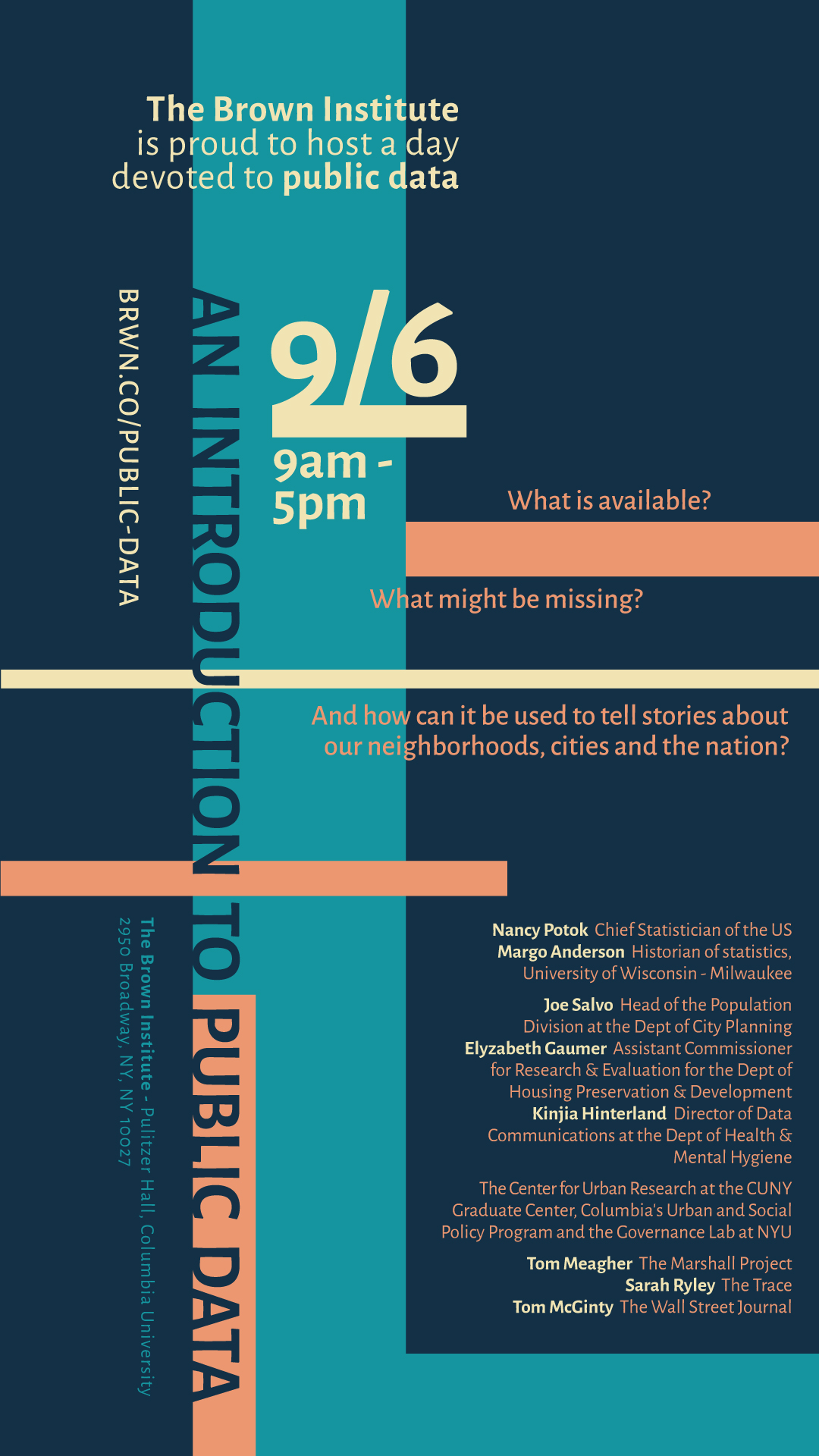
On September 6, from 9am-5pm, the Brown Institute is proud to host a day devoted to public data. It is designed for students in journalism, statistics and data science — essentially anyone who has an interest in understanding their neighborhoods, their cities, their state and even the nation through data. Throughout the day, students will